
Ever heard the word “pedestrian” and instantly thought it just means someone walking on the road? That’s partly true, but not the full picture. This simple-looking word actually carries both everyday and deeper meanings depending on how it’s used.
The Pedestrian Meaning is commonly tied to road safety and walking, but it can also appear in writing as a way to describe something ordinary or unexciting. That dual use is what often confuses people.
This guide breaks it down in a clear, human way so you can understand it without overthinking or second-guessing.
What Does Pedestrian Mean?
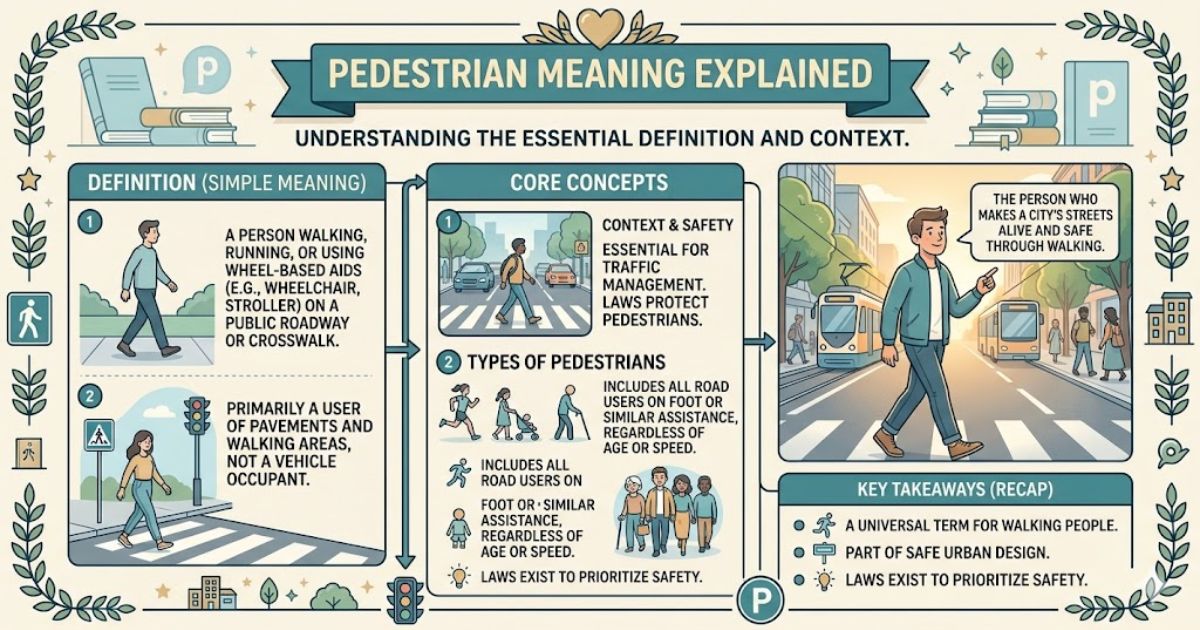
A pedestrian is a person who is walking, especially in public areas like streets, sidewalks, or crossings. It is commonly used in traffic and road safety contexts to describe people who are not driving vehicles.
Real-life examples:
- A person crossing the road at a zebra crossing
- Someone walking along a sidewalk
- A commuter walking to work instead of driving
Origin and Background of the Term
The word “pedestrian” comes from the Latin word pedester, meaning “going on foot.” It entered English through French and became widely used in traffic systems as cities developed roads and transportation rules.
Over time, it became a standard term in law, urban planning, and everyday language.
How Pedestrian Is Used in Daily Life
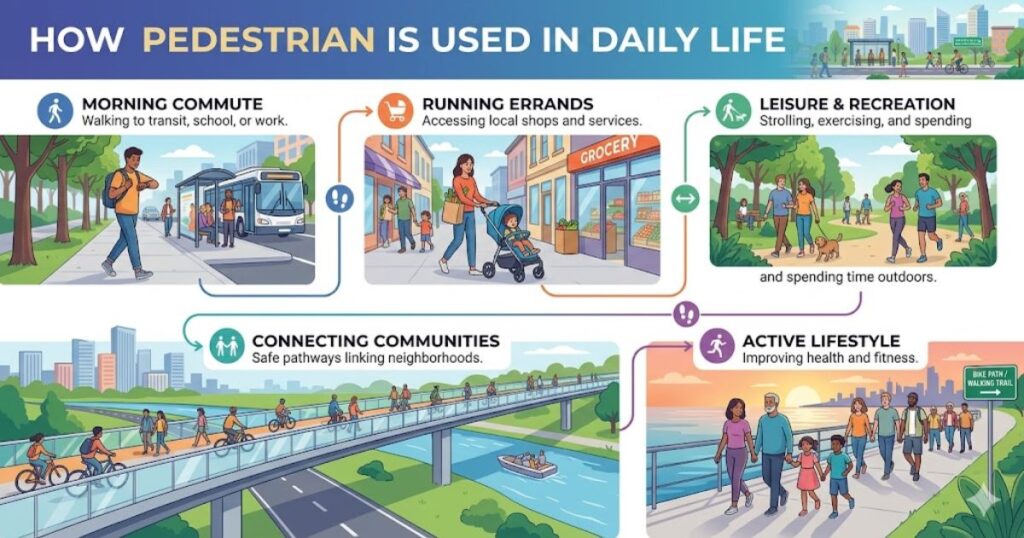
Today, “pedestrian” is used in several ways:
- Traffic rules and road signs
- Urban planning and safety discussions
- Transportation guidelines
- Casual descriptions of people walking
- Metaphorically, to describe something ordinary or unexciting
Emotional or Practical Meaning of Pedestrian
Practically, pedestrian refers to movement on foot and road safety.
Emotionally or figuratively, it can sometimes mean something “ordinary,” “boring,” or “lacking creativity” when describing ideas, writing, or performances.
So the tone depends heavily on context.
Read More: BTC Meaning in Text Explained for 2026!
Similar or Related Terms
- Walker
- Foot traveler
- Road user
- Commuter (walking context)
- Passerby
These terms overlap but are not always identical in meaning.
Common Misunderstandings About Pedestrian
- It does not only mean “walking casually”
- It is not always used negatively
- It can refer to legal road classifications
- It may also describe ordinary or unremarkable things in writing
Context is key to understanding it correctly.
Examples of Pedestrian in Sentences
- “Pedestrians must use the crosswalk.”
- “The city built safer paths for pedestrians.”
- “He took a pedestrian route to work every day.”
- “The story was a bit pedestrian in its writing style.”
- “Traffic rules prioritize pedestrian safety.”
Why Understanding Pedestrian Meaning Matters Today
With growing cities and traffic awareness, understanding terms like pedestrian is important for safety and communication. It also helps in reading instructions, road signs, and even descriptive writing more accurately.
The Pedestrian Meaning is not just about walking—it connects to safety, language, and even expression in literature.
Frequently Asked Questions
What does pedestrian mean in simple words?
It means a person who is walking, especially on roads or sidewalks.
Is pedestrian positive or negative?
It is neutral in traffic use but can be negative when describing something boring.
Where is pedestrian commonly used?
It is used in traffic rules, urban planning, and everyday language.
Is pedestrian formal or informal?
It is mostly formal, especially in safety and technical contexts.
Why do people search for pedestrian meaning?
To understand road signs, traffic rules, or figurative language usage.
Conclusion
Pedestrian is a simple word with both literal and figurative meanings. While it mainly refers to people walking, it also plays an important role in safety regulations and descriptive language.
Understanding the Pedestrian Meaning helps you interpret both everyday conversations and formal contexts with greater clarity.
