
Have you ever heard someone say “Shabbat Shalom” and wondered what it means or when you’re supposed to say it? This beautiful Jewish greeting is commonly used around the Jewish Sabbath, but its meaning goes deeper than a simple “hello.”
Shabbat Shalom combines two Hebrew words that express the idea of Sabbath and peace. The greeting carries a warm wish for a peaceful, restful, and meaningful Shabbat.
Whether you’ve seen it in a text message, on social media, or heard it from someone observing Shabbat, understanding the phrase can help you appreciate its cultural and religious significance. Let’s break it down in simple terms.
What does Shabbat Shalom mean?
Shabbat Shalom is a Hebrew greeting that means something like “peaceful Sabbath” or “peaceful Shabbat.”
It is commonly used by Jewish people before and during Shabbat, the Jewish Sabbath, which begins on Friday evening and ends on Saturday evening.
The greeting expresses a wish that the other person experiences peace, rest, and spiritual renewal during Shabbat.
For example, someone might say:
“Shabbat Shalom! I hope you have a peaceful weekend.”
The phrase can be used when greeting someone in person, writing a message, or posting on social media.
Although “peaceful Sabbath” is a useful English translation, Shalom has a richer meaning than simply the absence of conflict. It can suggest peace, well-being, wholeness, harmony, and a sense of completeness.
Meaning in Simple Words
In simple words, Shabbat Shalom means “Have a peaceful and restful Sabbath.”
Think of it as a warm blessing or good wish for someone’s Shabbat.
If a friend says “Shabbat Shalom” to you, they’re essentially wishing you a peaceful and meaningful time during the Sabbath.
For example:
Person A: “Shabbat Shalom!”
Person B: “Shabbat Shalom!”
The greeting is often returned in the same words.
It’s similar to saying “Have a peaceful Sabbath” rather than simply saying “Hello.”
The phrase can carry a sense of warmth, respect, community, and spiritual peace.
What does Shabbat mean?
Shabbat is the Hebrew word for the Jewish Sabbath.
Shabbat is a weekly sacred period in Judaism that begins before sunset on Friday and ends after nightfall on Saturday.
It is traditionally a time for rest, prayer, family, community, meals, and spiritual reflection. Many Jewish traditions involve stepping away from ordinary weekday activities and creating a special atmosphere for the Sabbath.
The word Shabbat is connected to the Hebrew root associated with resting or ceasing from work.
For many Jewish people, Shabbat isn’t simply a day off. It’s a meaningful weekly practice that creates time for rest and connection.
That’s why saying “Shabbat Shalom” is more than wishing someone a relaxing Saturday. It recognizes the special significance of the Sabbath.
What does Shalom mean?
Shalom is a Hebrew word commonly translated as “peace.” However, its meaning is broader than the English word usually suggests.
Depending on the context, shalom can refer to peace, well-being, harmony, safety, completeness, or wholeness.
You may hear shalom used as a greeting or farewell in Hebrew.
For example:
“Shalom!”
can function similarly to “Hello” or “Goodbye.”
In Shabbat Shalom, the word expresses a wish for peace and well-being during Shabbat.
So, when you put the two words together, the phrase creates a warm expression centered on a peaceful and meaningful Sabbath.
Meaning in English
The most straightforward English translation of Shabbat Shalom is:
“Peaceful Sabbath.”
You could also understand it as:
“Have a peaceful Sabbath.”
Or, in a more natural conversational sense:
“Wishing you a peaceful and restful Shabbat.”
There isn’t always one perfect English translation because Hebrew words can carry meanings that don’t fit neatly into a single English word.
For example, shalom can include ideas of peace, well-being, harmony, and wholeness. Therefore, “peaceful Sabbath” captures the basic meaning, while “wishing you a peaceful and meaningful Sabbath” conveys more of the sentiment.
Meaning in Judaism
In Judaism, Shabbat Shalom is closely connected with the weekly observance of Shabbat.
Shabbat is considered a sacred time of rest and spiritual focus. It begins on Friday evening and continues through Saturday evening.
For many Jewish communities, Shabbat involves special meals, prayers, blessings, family time, synagogue services, and traditions that distinguish the Sabbath from ordinary weekdays.
Saying “Shabbat Shalom” acknowledges this special period and expresses a wish that someone experiences its peace and blessings.
The greeting is especially common around Friday evening and Saturday.
Its meaning can also reflect the broader spiritual idea of stepping away from the pressure of everyday life and making space for rest, reflection, relationships, and faith.
Shabbat Shalom Meaning in Text
The Shabbat Shalom meaning in text is essentially the same as when the phrase is spoken.
Someone might send:
“Shabbat Shalom! Hope you have a beautiful evening.”
Here, they’re wishing you a peaceful Shabbat.
A family member might text:
“Shabbat Shalom ❤️”
A friend or acquaintance could also send the phrase as a simple greeting before Shabbat begins.
You don’t need to interpret it as a complicated hidden message. In most cases, it’s simply a warm Jewish Sabbath greeting.
If someone sends you “Shabbat Shalom,” an appropriate response is often:
“Shabbat Shalom!”
Returning the same greeting is natural and respectful.
Shabbat Shalom on Social Media
Shabbat Shalom is also commonly used on social media, especially on Friday and during Shabbat.
People may use it in posts, captions, comments, or messages to wish friends, family members, and followers a peaceful Sabbath.
For example, a social media post might say:
“Shabbat Shalom to everyone celebrating. Wishing you a peaceful and meaningful Shabbat.”
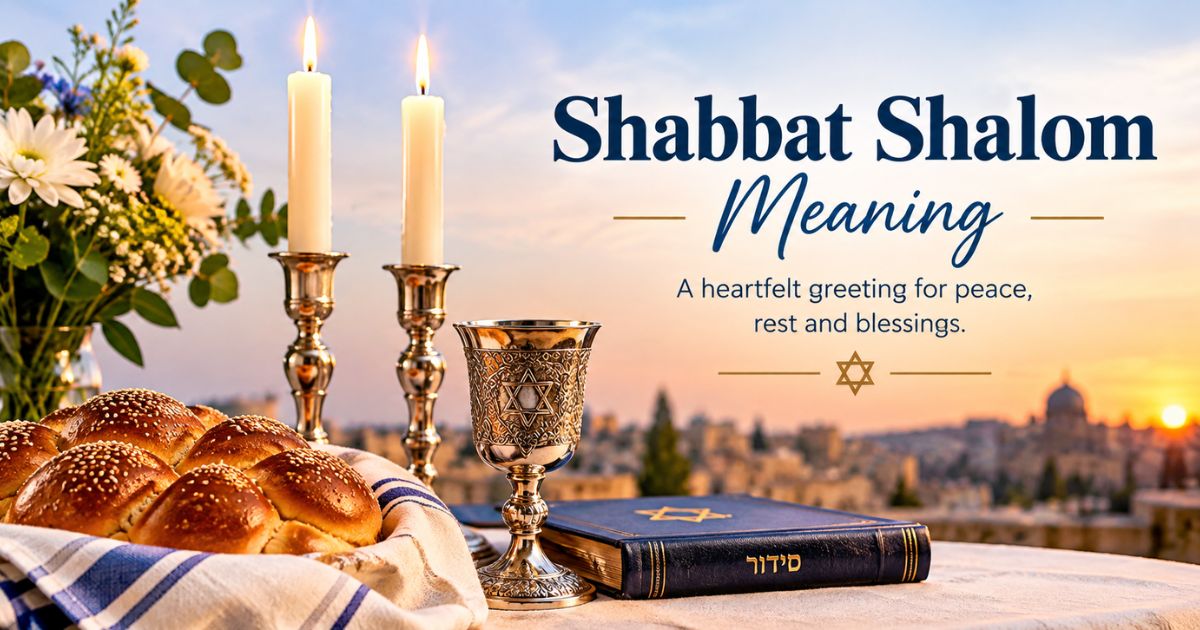
You may also see the phrase alongside images of candles, challah, family meals, nature, or other peaceful scenes connected with the beginning of Shabbat.
On social media, the phrase can serve both as a religious greeting and as a way of expressing connection with Jewish community and tradition.
The exact way someone uses it can vary depending on their personal beliefs and level of religious observance.
Read More: White Tongue Meaning: Causes, Symptoms & What You Should Know
Shabbat Shalom vs Shalom
Although Shabbat Shalom contains the word Shalom, the two expressions aren’t exactly the same.
Shalom is a general Hebrew greeting that can mean “hello,” “goodbye,” or convey peace and well-being depending on the context.
Shabbat Shalom, on the other hand, specifically refers to Shabbat.
| Phrase | General Meaning | Common Context |
|---|---|---|
| Shalom | Hello, goodbye, peace, well-being | General Hebrew greeting |
| Shabbat Shalom | Peaceful Sabbath / Have a peaceful Shabbat | Jewish Sabbath |
For example, you could say “Shalom” when greeting someone on an ordinary day.
You might say “Shabbat Shalom” when greeting someone around the Sabbath.
The second phrase therefore carries a more specific religious and cultural context.
Examples of Shabbat Shalom in Sentences
Here are several natural examples of how Shabbat Shalom can be used:
“Shabbat Shalom! I hope you have a peaceful evening.”
“Wishing you and your family a beautiful Shabbat Shalom.”
“She sent her parents a Shabbat Shalom message before sunset.”
“Our neighbors wished us Shabbat Shalom as they left.”
“Shabbat Shalom to everyone celebrating this week.”
“He greeted his friends with a warm Shabbat Shalom.”
“I received a lovely Shabbat Shalom text from my friend.”
“Shabbat Shalom! May your Sabbath be peaceful and meaningful.”
These examples show that the phrase can work naturally in conversations, greetings, text messages, and social media posts.
Conclusion
The Shabbat Shalom Meaning is essentially a wish for a peaceful and meaningful Sabbath. The phrase combines Shabbat, the Jewish Sabbath, with Shalom, a Hebrew word associated with peace, well-being, harmony, and wholeness.
You’ll commonly hear or see Shabbat Shalom around Friday evening and Saturday, when Jewish people observe Shabbat. It can be spoken in person, sent in a text, or shared on social media.
If someone says “Shabbat Shalom” to you, a simple “Shabbat Shalom” in return is a natural and respectful response.
Ultimately, the greeting expresses more than a simple farewell or hello. It carries a warm wish for rest, peace, connection, and a meaningful Sabbath.
FAQs
What does Shabbat Shalom mean?
Shabbat Shalom means “peaceful Sabbath” or “have a peaceful Shabbat.” It’s a common Jewish greeting used around the Sabbath.
What does Shabbat mean?
Shabbat is the Hebrew word for the Jewish Sabbath, a weekly sacred period that begins Friday evening and ends Saturday evening.
What does Shalom mean?
Shalom is a Hebrew word commonly translated as “peace,” but it can also express ideas of well-being, harmony, safety, and wholeness.
What is the meaning of Shabbat Shalom in English?
A natural English translation is “peaceful Sabbath” or “wishing you a peaceful and meaningful Sabbath.”
How do you respond to Shabbat Shalom?
The simplest response is “Shabbat Shalom.” You can also respond with a warm wish for a peaceful Shabbat.
When do you say Shabbat Shalom?
It’s commonly said around the beginning and during Shabbat, particularly from Friday evening through Saturday.
Is Shabbat Shalom a religious greeting?
Yes. It is a Jewish greeting associated specifically with Shabbat and carries religious and cultural significance.
Can you say Shabbat Shalom in a text?
Yes. Shabbat Shalom is commonly used in text messages to wish someone a peaceful and meaningful Sabbath.
Can Shabbat Shalom be used on social media?
Yes. People often use it in social media posts, captions, and comments to wish others a peaceful Shabbat.
Is Shabbat Shalom the same as Shalom?
No. Shalom is a broader Hebrew greeting, while Shabbat Shalom specifically refers to wishing someone peace during Shabbat.
Does Shalom only mean peace?
No. While “peace” is the most common translation, shalom can also communicate ideas such as well-being, completeness, harmony, and wholeness.
What does Shabbat Shalom mean spiritually?
Spiritually, it can express a wish for peace, rest, reflection, connection, and renewal during the sacred time of Shabbat.
