Have you ever known you had to do something difficult but kept putting it off? Maybe you needed to have an uncomfortable conversation, pay an expensive bill, make a hard decision, or finally deal with a problem you had been avoiding.
That’s when people often say, “It’s time to bite the bullet.”
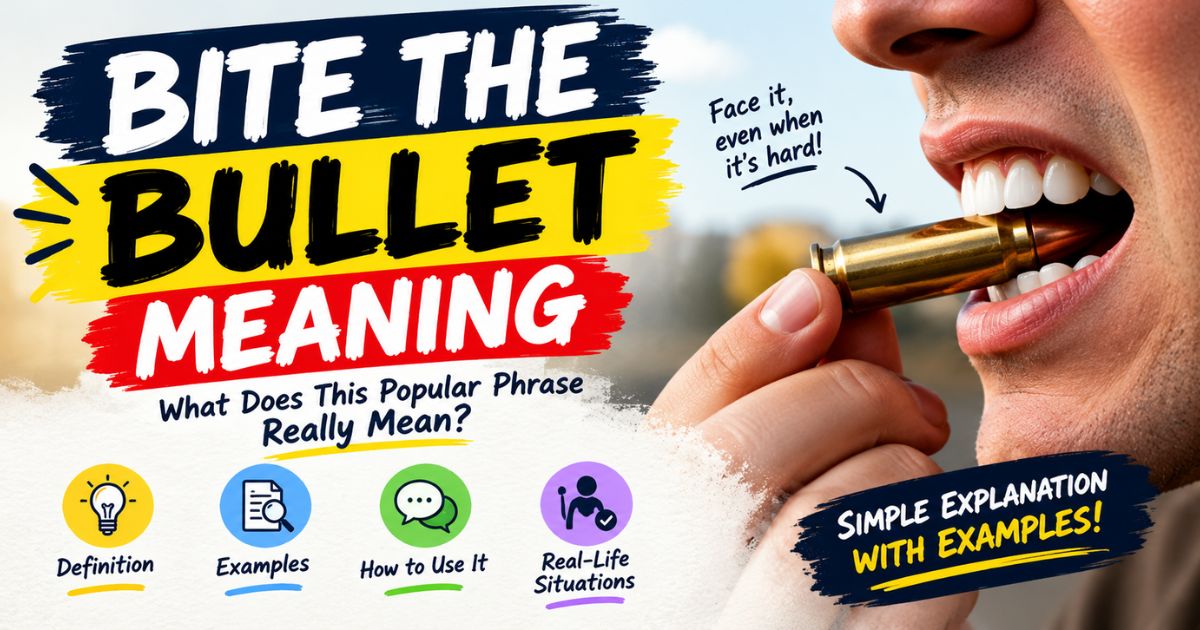
The bite the bullet meaning is about facing something difficult or unpleasant instead of continuing to avoid it. It usually means accepting that a situation won’t be easy, gathering your courage, and doing what needs to be done anyway.
This popular English idiom appears in everyday conversations, workplace communication, movies, books, texting, and social media. Although the phrase sounds strange when taken literally, its figurative meaning is simple and powerful.
Let’s break down exactly what bite the bullet means, where the expression came from, and how you can use it naturally in a sentence.
What Does Bite the Bullet Mean?
The bite the bullet meaning is to face a difficult or unpleasant situation with courage and determination.
When you bite the bullet, you stop avoiding something you know you must do. You accept that it may be uncomfortable, painful, expensive, stressful, or difficult, but you decide to deal with it anyway.
For example:
“I didn’t want to go to the dentist, but I finally bit the bullet and made an appointment.”
The person didn’t suddenly become excited about visiting the dentist. They simply stopped putting it off and took the necessary action.
In everyday English, the bite the bullet idiom often suggests:
- Accepting something unpleasant
- Facing a difficult situation
- Doing something you don’t want to do
- Stopping yourself from avoiding a problem
- Gathering courage
- Getting an unpleasant task over with
- Taking necessary action despite hesitation
The expression usually has a sense of bravery, determination, and perseverance.
Meaning in Simple Words
In simple words, bite the bullet means to force yourself to do something difficult or unpleasant because you know it has to be done.
Think about it this way: imagine standing in front of a cold swimming pool. You can stand there worrying about the cold water for ten minutes, or you can take a deep breath and jump in.
When you finally jump, you’ve essentially bitten the bullet.
A Simple Example
You need to tell your boss about a mistake you made.
You feel nervous and want to avoid the conversation. However, you know hiding the mistake could make things worse.
So, you gather your courage and tell your boss.
You could say:
“I was nervous, but I decided to bite the bullet and tell my manager what happened.”
That’s the basic bite the bullet definition: do what needs to be done, even when you don’t want to do it.
Origin of Bite the Bullet
The bite the bullet origin is one of the most interesting parts of this English idiom.
Many people believe the expression comes from old battlefield medicine. According to the popular explanation, soldiers undergoing painful medical procedures may have been given something to bite down on because anesthesia was not widely available.
The idea was that biting on something could help them endure intense pain.
However, the exact historical origin of the phrase is more complicated than the popular battlefield story suggests. References to the expression became well known in English literature during the nineteenth century.
The phrase is often associated with Rudyard Kipling and his 1891 novel The Light That Failed, where the expression appeared in a form that helped establish it in popular English usage.
Over time, bite the bullet moved away from its possible connection to physical pain and became a figurative expression.
Today, you don’t literally bite anything.
Instead, you bite the bullet figuratively when you prepare yourself mentally to face something unpleasant.
Read More: Rooting for You Meaning: Definition, Examples & How to Use It
Why Do People Say “Bite the Bullet”?
People say bite the bullet because the phrase creates a strong image of enduring something painful.
The modern meaning carries the same basic idea:
You know something will be unpleasant, but you decide to endure it and move forward anyway.
That’s why the phrase works so well when talking about difficult decisions, uncomfortable situations, painful experiences, and necessary actions.
What Does “I’ll Bite the Bullet” Mean?
When someone says, “I’ll bite the bullet,” they mean:
“I’ll do the difficult thing, even though I don’t really want to.”
For example:
“The car repairs are expensive, but I’ll bite the bullet and get them done.”
The speaker accepts that the situation is unpleasant. However, they understand that delaying the repairs could create an even bigger problem.
Another example:
“Nobody wanted to make the difficult phone call, so I said I’d bite the bullet and do it.”
In both examples, the person chooses to take responsibility and deal with the problem.
Does “I’ll Bite the Bullet” Mean Giving Up?
No. Biting the bullet doesn’t usually mean giving up.
In fact, it often means the opposite.
Giving up means stopping because something is too difficult. Biting the bullet means continuing despite difficulty.
You may accept an unpleasant reality, but you still take action.
For example:
“I don’t want to work this weekend, but I’ll bite the bullet and finish the project.”
The person isn’t giving up. They’re pushing through a difficult situation.
Bite the Bullet Meaning at Work
The bite the bullet meaning at work usually refers to doing a difficult but necessary task.
Workplaces are full of situations where this expression fits naturally. You may need to:
- Have a difficult conversation with an employee
- Admit a mistake
- Complete an unpleasant task
- Make a challenging business decision
- Spend money on necessary improvements
- Meet a deadline under pressure
- Deal with the consequences of a decision
For example:
“The company had been delaying the software upgrade, but management finally bit the bullet and invested in a new system.”
This means the company stopped postponing the expensive decision and took action.
Another example:
“I’ve been avoiding that presentation all week, but I need to bite the bullet and finish it today.”
In workplace communication, the phrase sounds natural and conversational. It can make a difficult situation sound more relatable without becoming overly dramatic.
Bite the Bullet Meaning in Text
The bite the bullet meaning in text is the same as its meaning in spoken English.
If someone sends you a message saying:
“I guess I just have to bite the bullet.”
They usually mean:
“I have to do something difficult or unpleasant, even though I don’t want to.”
For example, in a WhatsApp conversation:
Person 1: “Are you going to tell her what happened?”
Person 2: “Yeah, I’ve been avoiding it, but I guess I need to bite the bullet.”
The second person means they have decided to stop avoiding the difficult conversation.
Bite the Bullet Meaning in Texting and Social Media
On WhatsApp, Instagram, Snapchat, TikTok, and other social media platforms, people often use the expression when talking about everyday challenges.
Examples include:
“Finally biting the bullet and starting my workout routine.”
“Time to bite the bullet and clean my room.”
“I’ve put this assignment off long enough. Time to bite the bullet.”
The phrase works well online because it quickly communicates a familiar feeling: you don’t want to do something, but you know you have to.
Examples in a Sentence
Understanding bite the bullet examples can help you use the idiom naturally.
Here are several examples in different situations.
Everyday Life
“I hate going to the dentist, but I finally bit the bullet and booked an appointment.”
“We’ve been putting off cleaning the garage, but this weekend we’re going to bite the bullet and do it.”
Money and Expenses
“The laptop was expensive, but I had to bite the bullet and buy a new one for work.”
“She bit the bullet and paid for the repairs before the problem became worse.”
Difficult Conversations
“He knew the conversation would be uncomfortable, but he bit the bullet and told the truth.”
“Sometimes you have to bite the bullet and have the difficult conversation.”
Education
“I didn’t want to study all weekend, but I bit the bullet because my exam was coming.”
Work
“Our team finally bit the bullet and started the project we had been delaying.”
Relationships
“They knew their relationship had problems, so they bit the bullet and talked honestly about them.”
These examples show that the bite the bullet phrase can apply to many different situations.
Bite the Bullet Meaning in a Relationship
The bite the bullet meaning in a relationship often involves facing an uncomfortable emotional situation instead of avoiding it.
For example, someone may need to:
- Discuss a serious problem
- Admit their feelings
- Apologize for a mistake
- End an unhealthy relationship
- Talk about future expectations
- Address repeated disagreements
Imagine someone saying:
“I’ve been avoiding the conversation for weeks, but I need to bite the bullet and talk to him.”
This doesn’t mean they want the conversation. It means they understand that avoiding it won’t solve anything.
In relationships, biting the bullet often requires emotional courage. Difficult conversations can feel uncomfortable, but sometimes they’re necessary for honesty, growth, and moving forward.
Bite the Bullet vs Take the Plunge
Bite the bullet and take the plunge can both involve overcoming hesitation, but they don’t mean exactly the same thing.
| Phrase | Meaning | Main Feeling |
|---|---|---|
| Bite the bullet | Face something difficult or unpleasant | Courage through discomfort |
| Take the plunge | Finally begin something new or make a major decision | Courage through uncertainty |
For example:
“I finally took the plunge and started my own business.”
This focuses on beginning something new despite uncertainty.
Compare that with:
“I had to bite the bullet and invest my savings in necessary repairs.”
This focuses more on accepting an unpleasant or difficult situation.
The Key Difference
Take the plunge often involves starting something you’ve been hesitant about.
Bite the bullet usually involves doing something you expect to be unpleasant.
Both expressions involve courage, but the emotional situation is slightly different.
Bite the Bullet vs Face the Music
Another phrase often compared with bite the bullet is face the music.
| Phrase | Meaning |
|---|---|
| Bite the bullet | Do something difficult or endure something unpleasant |
| Face the music | Accept the consequences of your actions |
For example:
“I knew the meeting would be uncomfortable, but I bit the bullet and attended.”
Here, the person willingly faces something difficult.
Now compare:
“After breaking the rules, he had to face the music.”
This means he had to accept the consequences of what he had done.
A Simple Way to Remember the Difference
Bite the bullet = Deal with the difficult thing.
Face the music = Deal with the consequences.
Sometimes a situation can involve both.
For example, you might bite the bullet and tell your boss about a mistake. Then you may have to face the music and accept the consequences.
Other Ways to Say It
If you’re looking for a bite the bullet synonym or another way to express a similar idea, several phrases may work depending on the situation.
Get It Over With
This means to complete something unpleasant so you no longer have to worry about it.
“Let’s just get it over with.”
Face the Problem
This is a direct and simple alternative.
“It’s time to face the problem.”
Take the Plunge
This works when you’re finally making a decision or starting something new.
“She finally took the plunge and applied for the job.”
Grin and Bear It
This means accepting and enduring something unpleasant without complaining too much.
“The flight was uncomfortable, but we had to grin and bear it.”
Push Through
This means continuing despite difficulty.
“The project was exhausting, but we pushed through.”
Face the Facts
This means accepting reality, especially when the truth is difficult.
“He finally had to face the facts.”
Each of these bite the bullet alternatives has a slightly different meaning, so choosing the right phrase depends on the situation.
Is Bite the Bullet Formal?
Bite the bullet is generally considered an informal English idiom.
It’s very common in everyday English and works naturally in conversations, articles, interviews, workplace discussions, and casual writing.
You might say:
“We need to bite the bullet and make a decision.”
That sounds natural in a meeting.
However, in a highly formal legal document or academic paper, you may prefer more direct language such as:
- Accept the situation
- Take necessary action
- Address the issue
- Make the difficult decision
- Proceed despite the difficulty
Is It Used in American and British English?
Yes. The bite the bullet idiom is understood and commonly used in both American English and British English.
Its meaning remains essentially the same:
Face something unpleasant with courage and do what needs to be done.
Is Bite the Bullet Positive or Negative?
The expression can describe a negative situation, but the act of biting the bullet is often viewed positively.
Why?
Because it usually involves:
- Courage
- Determination
- Responsibility
- Resilience
- Taking action
The situation itself may be unpleasant, but your response to it can be admirable.
For example, losing money on an unexpected repair is negative. However, dealing with the problem responsibly by fixing it can show maturity and determination.
So, the phrase often carries this message:
The situation may be difficult, but you’re strong enough to deal with it.
How to Use Bite the Bullet Correctly
The bite the bullet usage is fairly simple once you understand its meaning.
You can use different forms of the phrase depending on the sentence.
Present Tense
“I need to bite the bullet and make a decision.”
Past Tense
“She finally bit the bullet and apologized.”
Future Meaning
“I’ll bite the bullet and handle it tomorrow.”
Question Form
“Do you think it’s time to bite the bullet?”
The phrase usually appears when someone has been hesitating, delaying, worrying, or avoiding something.
That’s an important clue.
If there’s no difficult decision or unpleasant task involved, bite the bullet may not be the best expression.
Common Situations Where You Can Bite the Bullet
You might use this idiom when you need to:
- Make a difficult decision
- Spend money on something necessary
- Have an uncomfortable conversation
- Admit a mistake
- Deal with a painful situation
- Stop procrastinating
- Accept an unavoidable problem
- Complete an unpleasant task
- Take responsibility
- Move forward despite fear
The central idea remains the same: stop avoiding the situation and deal with it bravely.
Conclusion
The bite the bullet meaning is simple but powerful: to face something difficult or unpleasant and do what needs to be done despite fear, hesitation, or discomfort.
Whether you’re dealing with an expensive bill, a difficult conversation, a challenging workplace decision, or something you’ve been putting off for weeks, this English idiom describes the moment when you finally stop avoiding the problem and take action.
You don’t have to enjoy the situation to bite the bullet. In fact, that’s exactly the point.
You know it won’t be easy. You gather your courage anyway. Then you move forward.
Sometimes, that’s the bravest thing you can do.
FAQs
What does bite the bullet mean in simple words?
In simple words, bite the bullet means to force yourself to do something difficult or unpleasant because you know it needs to be done.
What does bite the bullet mean in texting?
In texting, bite the bullet means the same thing as in regular conversation. It means deciding to face a difficult situation instead of avoiding it.
What does “I’ll bite the bullet” mean?
“I’ll bite the bullet” means “I’ll do the difficult or unpleasant thing, even though I don’t want to.”
How do you use bite the bullet in a sentence?
You can say:
“I didn’t want to have the conversation, but I finally bit the bullet and called her.”
Does bite the bullet mean being brave?
Yes. The phrase often suggests courage, determination, and the ability to face something unpleasant.
Does bite the bullet mean giving up?
No. It usually means taking action despite difficulty rather than giving up.
Is bite the bullet positive or negative?
The situation may be negative or unpleasant, but biting the bullet is often seen as positive because it shows courage and responsibility.
Is bite the bullet formal or informal?
It is mainly an informal idiomatic expression, although people also use it in casual workplace communication and general writing.
Where did the phrase bite the bullet come from?
The phrase is commonly connected with the idea of enduring pain during old medical procedures, although its exact historical origin is debated. It became well established in English during the nineteenth century.
What is another way to say bite the bullet?
Depending on the context, you could say get it over with, face the problem, push through, grin and bear it, or take necessary action.
What is the difference between bite the bullet and face the music?
Bite the bullet means facing something difficult or unpleasant, while face the music usually means accepting the consequences of your actions.
What is the difference between bite the bullet and take the plunge?
Bite the bullet focuses on enduring something difficult or unpleasant. Take the plunge usually means finally starting something new or making a major decision despite uncertainty.
