
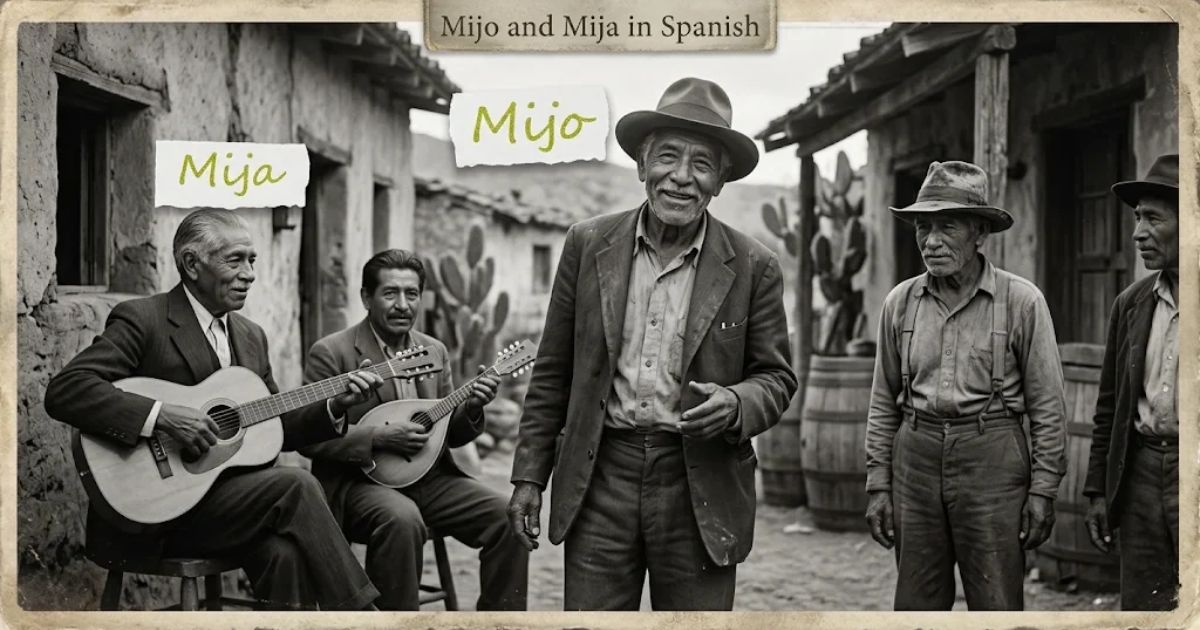
Have you ever heard someone call another person mijo or mija and wondered what those words mean? These affectionate Spanish expressions are common in everyday conversations, especially among family members, close friends, and people who want to show warmth or care.
In Spanish, mijo and mija are informal terms of affection that generally mean “my son” and “my daughter.” However, their meanings go beyond a literal family relationship. Depending on the situation, someone might use them to address a child, comfort a friend, speak warmly to a younger person, or express affection toward someone close.
If you’re learning Spanish or have heard these words in a conversation, understanding their cultural meaning will help you use them naturally. Let’s look at their translations, pronunciation, variations, and the situations where they make sense.
Mijo Meaning in Spanish
Mijo is an affectionate Spanish term that means “my son” or, more naturally in everyday English, “son” or “dear.” It’s commonly used when speaking to a boy or man in a warm, familiar, or caring way.
The word is a shortened combination of two Spanish words:
- Mi: My
- Hijo: Son
When these words are spoken together, mi hijo can naturally become mijo in everyday speech.
The feminine version is mija, which comes from mi hija and means “my daughter” or an affectionate form of address for a girl or woman.
However, you shouldn’t assume that someone using mijo or mija is necessarily talking to their biological child. Spanish speakers often use these expressions with younger relatives, family friends, close acquaintances, and even people they want to address affectionately.
For example:
Parent: “¿Cómo estás, mijo?”
English: “How are you, son?”
Another example:
Older woman: “Ven aquí, mija.”
English: “Come here, dear.”
In both situations, the words communicate familiarity and affection rather than simply identifying a family relationship.
When and How to Use Mijo in Spanish
Knowing the translation is helpful, but understanding when to use mijo and mija is equally important.
These expressions are generally informal. They can sound loving, comforting, friendly, or sometimes slightly parental, depending on who says them and how they’re used.
Here are some common situations where you’ll hear them.
Calling Kids Mijo or Mija in Spanish
One of the most common uses of mijo and mija is when parents, grandparents, or other relatives speak to children.
A mother might call her son mijo, while a father might use mija when speaking affectionately to his daughter.
For example:
- “Buenos días, mijo.” — Good morning, son.
- “¿Ya comiste, mija?” — Have you eaten yet, sweetheart?
- “Te quiero mucho, mijo.” — I love you very much, son.
- “Ven con tu abuela, mija.” — Come to your grandmother, sweetheart.
These expressions make everyday conversations feel warmer and more personal.
Grandparents especially may use mijo and mija as familiar terms of affection. Instead of repeatedly calling a child by their name, they might naturally use these words when asking questions, giving advice, or showing concern.
You might also hear them when a parent comforts a child after a difficult day:
“No te preocupes, mijo. Todo va a estar bien.”
Translation: “Don’t worry, son. Everything will be okay.”
In this context, mijo adds reassurance and emotional warmth to the sentence.
Read More: YH Meaning in Text: What It Means on Snapchat, TikTok & Social Media
Mijo or Mija to Refer to a Boy or a Girl
The main difference between mijo and mija is grammatical gender.
- Mijo: Generally used for a boy or man.
- Mija: Generally used for a girl or woman.
The words are closely related, but choosing the correct form helps your Spanish sound natural.
For example:
| Spanish | English Translation |
|---|---|
| ¿Cómo estás, mijo? | How are you, son? |
| ¿Qué haces, mija? | What are you doing, dear? |
| Gracias, mijo. | Thank you, son. |
| Te extraño, mija. | I miss you, sweetheart. |
| Ven aquí, mijo. | Come here, son. |
| Descansa, mija. | Get some rest, dear. |
Although these expressions traditionally refer to sons and daughters, their everyday use isn’t always restricted to biological children.
An older person might call a younger boy mijo or a younger girl mija as a friendly or caring gesture.
Mijo in Spanish to Refer to Friends
Mijo and mija can also appear in conversations between friends, particularly when people have a close relationship or are comfortable using affectionate language.
For example, a woman might say to her friend:
“Ay, mija, tienes que descansar.”
Translation: “Oh, girl, you need to get some rest.”
Here, mija doesn’t mean that the speaker considers her friend a daughter. It’s simply an affectionate way to address someone.
Similarly, someone might tell a male friend:
“Mijo, necesitas relajarte un poco.”
Translation: “Dear, you need to relax a little.”
The expression can make advice sound more personal and caring.
However, context matters. Not everyone uses these words with friends, and some people may find them too familiar when speaking to someone they barely know.
If you’re unsure whether a person would appreciate this type of address, using their name is a safer choice.
Mijo and Mija in Spanish for Romantic Partners
Can you call your boyfriend mijo or your girlfriend mija?
Yes, you can, depending on your relationship, regional speech, and personal preferences.
Some Spanish-speaking couples use mijo and mija as affectionate nicknames. In these situations, the words can communicate tenderness, closeness, and familiarity.
For example:
To a boyfriend:
“Buenos días, mijo. Espero que tengas un lindo día.”
Translation: “Good morning, sweetheart. I hope you have a lovely day.”
To a girlfriend:
“Te extraño, mija. Quiero verte pronto.”
Translation: “I miss you, sweetheart. I want to see you soon.”
In romantic relationships, the expressions can sound playful or loving.
However, they’re not exclusively romantic terms. If someone calls you mijo or mija, it doesn’t automatically mean they’re flirting with you.
The relationship, tone, and surrounding conversation are important clues to the intended meaning.
Mijo and Mija: Variants and Pronunciation
Spanish has several affectionate variations of these expressions. You may encounter different spellings depending on the region, speaker, or informal writing style.
Understanding these variations can help you recognize them in conversations and online messages.
1. Mijo
This is the masculine form derived from mi hijo. It’s commonly used when addressing a boy, son, or man affectionately.
Example: “¿Qué pasó, mijo?”
Translation: “What’s going on, son?”
2. Mija
This is the feminine form derived from mi hija. It’s used when addressing a girl, daughter, or woman affectionately.
Example: “Gracias por ayudarme, mija.”
Translation: “Thanks for helping me, dear.”
3. Mi hijo
This is the original two-word expression meaning “my son.”
Example: “Mi hijo está en la escuela.”
Translation: “My son is at school.”
Unlike mijo as a direct form of address, this sentence refers to the speaker’s actual son.
4. Mi hija
This is the feminine original expression meaning “my daughter.”
Example: “Mi hija quiere aprender español.”
Translation: “My daughter wants to learn Spanish.”
5. Mijito and Mijita
These are affectionate diminutive variations.
- Mijito: A more affectionate or tender variation of mijo.
- Mijita: A more affectionate or tender variation of mija.
They can be used with children or people the speaker feels close to.
For example:
“Ven, mijito.”
Translation: “Come here, sweetheart.”
“¿Cómo estás, mijita?”
Translation: “How are you, sweetheart?”
How to Pronounce Mijo and Mija
Both words are relatively easy to pronounce once you understand Spanish vowel sounds.
- Mijo: Pronounced approximately MEE-hoh.
- Mija: Pronounced approximately MEE-hah.
The Spanish letter J has an H-like sound in English, although the exact sound can vary by accent. It isn’t pronounced like the English J in “jam.”
The emphasis falls on the first syllable in both words.
Conclusion
Understanding mija and mijo in Spanish helps you appreciate how Spanish speakers express affection and familiarity in everyday conversations.
Mijo generally means “my son,” while mija means “my daughter.” However, both expressions can also be used as affectionate terms for children, friends, younger people, and sometimes romantic partners.
The most important thing to remember is that context determines their meaning. Someone calling you mijo or mija might be expressing parental affection, friendliness, comfort, or romantic tenderness.
If you’re learning Spanish, recognizing these expressions will help you understand everyday conversations more naturally. Just pay attention to your relationship with the speaker and the situation before using them yourself.
Frequently Asked Questions
What does mijo mean in Spanish?
Mijo is an affectionate Spanish expression meaning “my son.” It’s derived from mi hijo and is commonly used to address boys, sons, or younger men in a warm and familiar way.
What does mija mean in Spanish?
Mija means “my daughter.” It comes from mi hija and is also used as an affectionate term when addressing girls, women, or people close to the speaker.
Is mijo a romantic term?
Not necessarily. Mijo can be used romantically between partners, but it’s also common among family members and friends. The relationship and context determine its meaning.
Can you call a girl mijo?
Traditionally, mijo is masculine and mija is feminine. If you’re addressing a girl or woman, mija is generally the appropriate form.
Can you call a boy mija?
Generally, no. Mija is the feminine form, while mijo is the masculine form. Use mijo when addressing a boy or man affectionately.
What is the difference between mijo and mi hijo?
Mi hijo literally means “my son” and is written as two separate words. Mijo is a contracted, affectionate form commonly used in informal speech.
What does mijita mean?
Mijita is an affectionate variation of mija. It can mean “little daughter,” “sweetheart,” or “dear,” depending on the context.
Is mijo used in Mexico?
Yes. Mijo and mija are particularly familiar expressions in Mexican Spanish and are also heard in other Spanish-speaking communities. Their frequency and social use vary by region.
